JonBenét Ramsey Case Update: New Cipher Analysis Highlights Timeline Discrepancies
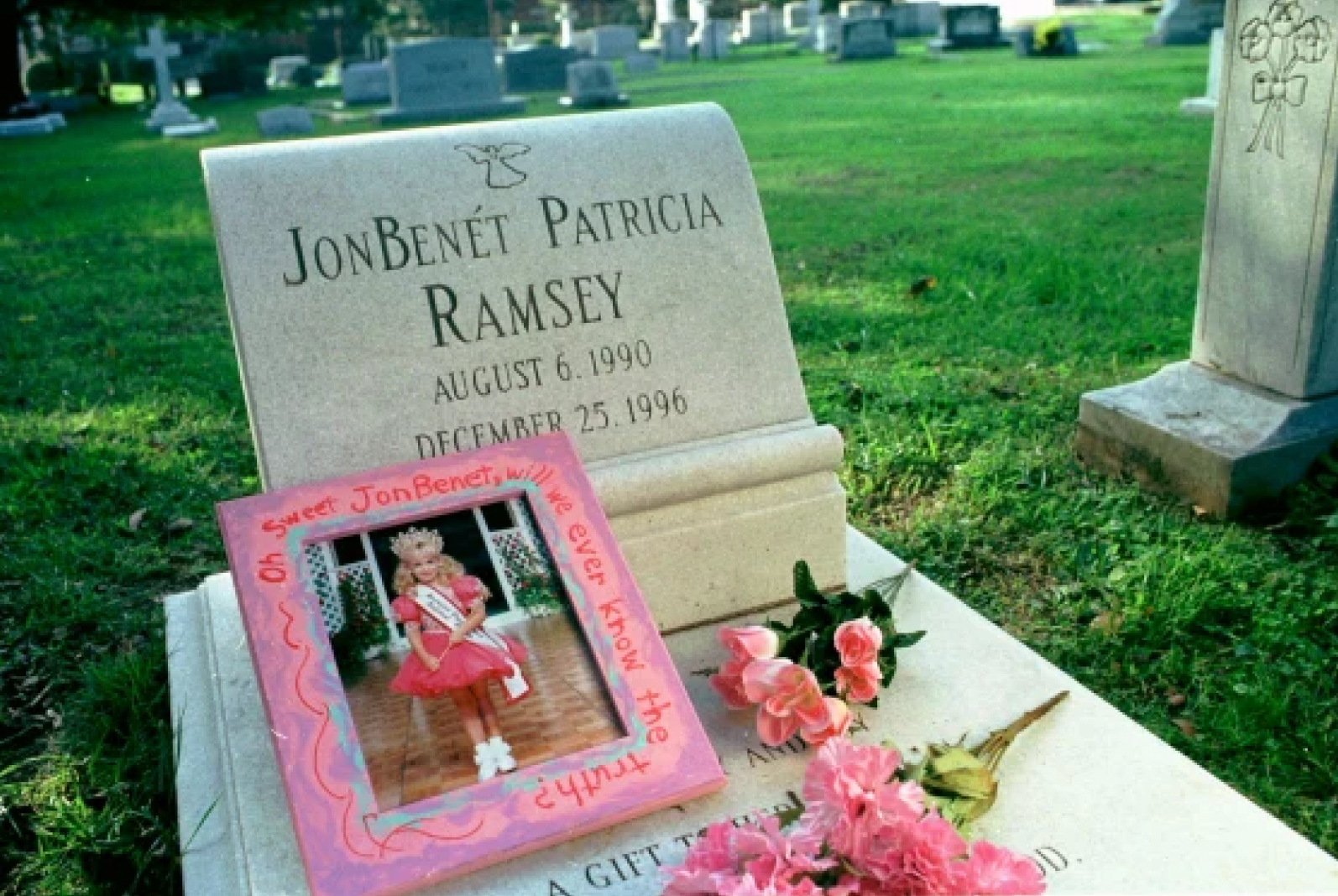
Grave of Jonbenet Ramsey in Georgia
A newly documented forensic analysis of a written cipher submitted in 2004 has identified content that raises renewed questions in the investigation into the murder of JonBenét Ramsey. The issue identified is not interpretive in nature—it is chronological, centering on what information was knowable at the time the cipher was authored versus what entered the public record years later.
Why Timeline Integrity Matters in the JonBenét Ramsey Case
In forensic and cold-case analysis, timelines govern evidentiary credibility. Investigators must evaluate when specific details became publicly available, how widely they were disseminated, and who could reasonably have accessed them. When a written communication appears to demonstrate awareness prior to disclosure, that discrepancy must be documented and reviewed objectively.
Jonbenet Ramsey pictured on People Magazine

2004 Cipher Content Referencing Later-Disclosed Details
Recent decoding work identified statements within the cipher that reference ransom note authorship, interpersonal relationships described as military or service-based, familiarity with naval environments, weapon descriptions involving a wooden or martial-arts training sword, and assertions regarding head injury mechanisms. These elements are presented strictly as claims embedded within the cipher.
Ransom Note and Weapon References Within the Cipher
The cipher includes language that appears to reference authorship of the ransom note and the use of a wooden or martial-arts training sword. These references are notable because detailed public discussion of such theories emerged well after the cipher’s 2004 submission, raising legitimate forensic questions regarding information access and timing.
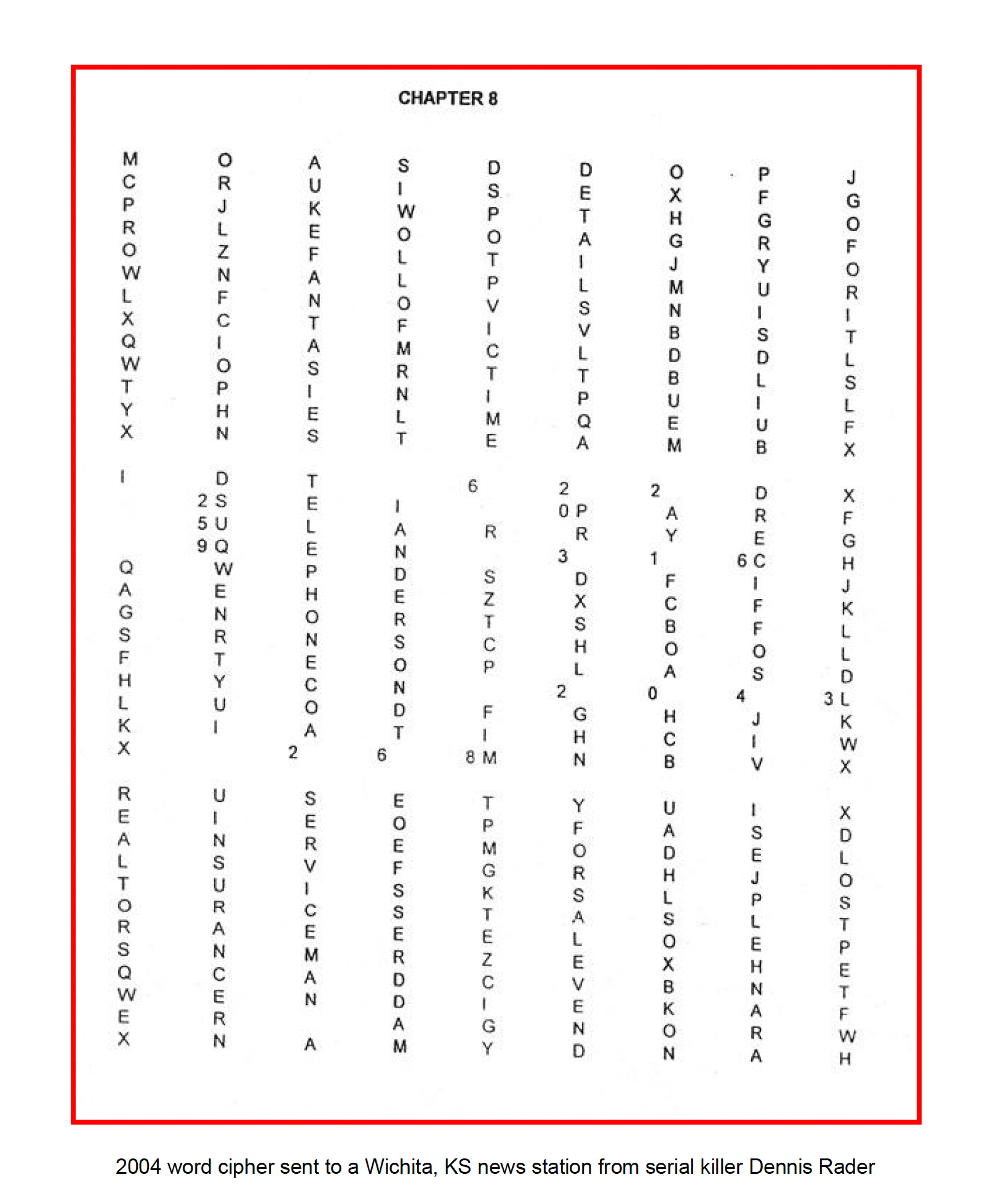
2004 word cipher sent to a Wichita, KS news station from serial killer Dennis Rader.
The Central Forensic Question: Knowledge Before Disclosure
The core issue presented by this analysis remains unresolved and direct:
How did the author of the cipher possess information in 2004 that was not publicly available at the time?
This question now extends beyond a single case. To date, decoding efforts have identified references spanning more than 20 cases, including names, environments, and contextual details that were not disclosed to the public until years later. The consistency of this pattern elevates the importance of timeline-based review.
Possible explanations—none of which are asserted—include prior non-public access, third-party transmission, symbolic fabrication, or coincidence requiring formal elimination. Each must be evaluated objectively.
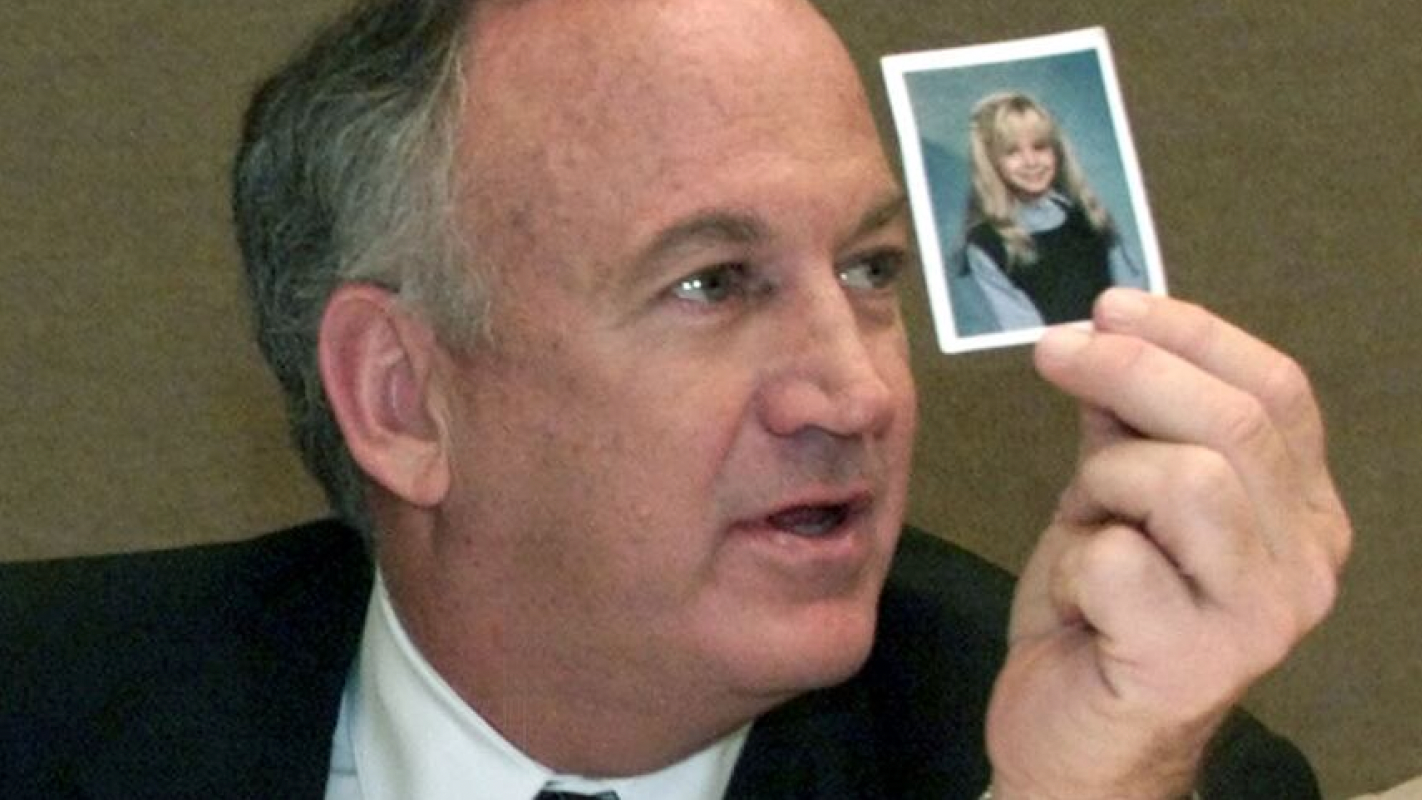
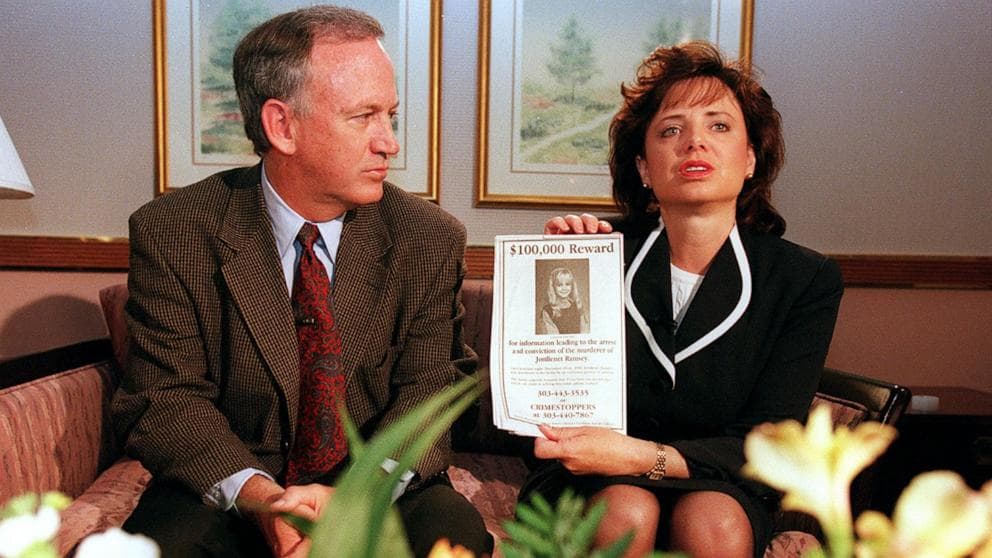
John Ramsey holding up a school photo of Jonbenet Ramsey
Behavioral and Forensic Significance of Cipher Communications
Ciphers are intentional communications. From a forensic standpoint, they may function as signaling, fantasy, deception, or admission. Determining which applies depends on chronology, corroboration, and behavioral context rather than assumption or narrative pressure.
Preservation, Documentation, and Review
All decoded materials, comparative timelines, images, and analytical notes related to this review are being preserved and logged. The objective is to ensure the investigative record remains complete, auditable, and available for independent forensic and law-enforcement review.
Why This Update Matters
Cold cases are not advanced through speculation or comfort. They move forward through disciplined analysis, documentation, and the willingness to confront inconsistencies. When knowledge appears to predate disclosure—across multiple cases—it demands scrutiny.
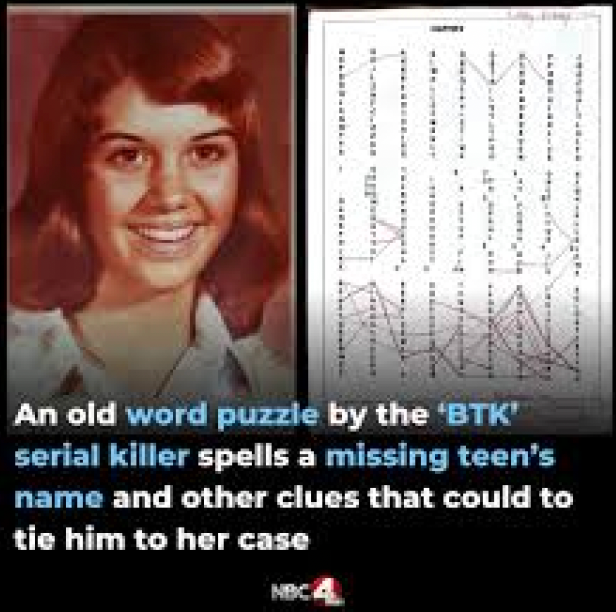
Cynthia Dawn Kinney and connection made by Osage County in 2023 to the word puzzle.
Frequently Asked Questions
Q: Does this cipher analysis prove new facts about the JonBenét Ramsey case?
A: No. This analysis documents statements contained within a 2004 cipher and examines them against disclosure timelines. It raises questions but does not assert conclusions.
Q: Are the statements in the cipher being presented as factual?
A: No. All statements are presented as claims embedded within the cipher and are subject to forensic evaluation.
Q: Why is the year 2004 significant?
A: The cipher was submitted in 2004. Any references to information disclosed after that date present a timeline issue that must be examined.
Q: How many cases are now implicated in this decoding work?
A: To date, more than 20 cases have been identified within the decoded material as containing references that merit timeline review.
Q: Is this analysis accusing any individual or agency?
A: No. The purpose of this work is documentation and preservation of potential evidentiary inconsistencies for objective review.
Conclusion
The question remains open and unresolved: how did the cipher’s author demonstrate awareness of information that was not publicly available in 2004? Until that question is answered, the material warrants continued forensic attention.

Dennis Rader in court after his apprehension in 2005
Disclaimer
This article is intended for informational and investigative documentation purposes only. All references to individuals, cases, or events are presented within the context of cipher content and timeline analysis. No statements herein assert guilt, factual accuracy, or legal conclusions. This material does not replace official investigations and should be evaluated alongside verified records and independent review.
REFERENCES:
DNA testing renews hope for closure in JonBenét Ramsey case
Here's Why JonBenét Ramsey's Dad Is Hopeful Her Murder Will Be Solved Soon
JonBenet Ramsey Murder Fast Facts
JonBenet Ramsey’s Father Confirms ‘New Evidence’ Could Help Solve Almost 30-Year-Old Cold Case
JonBenet Ramsey’s Father Confirms Bombshell ‘Evidence’ in Murder